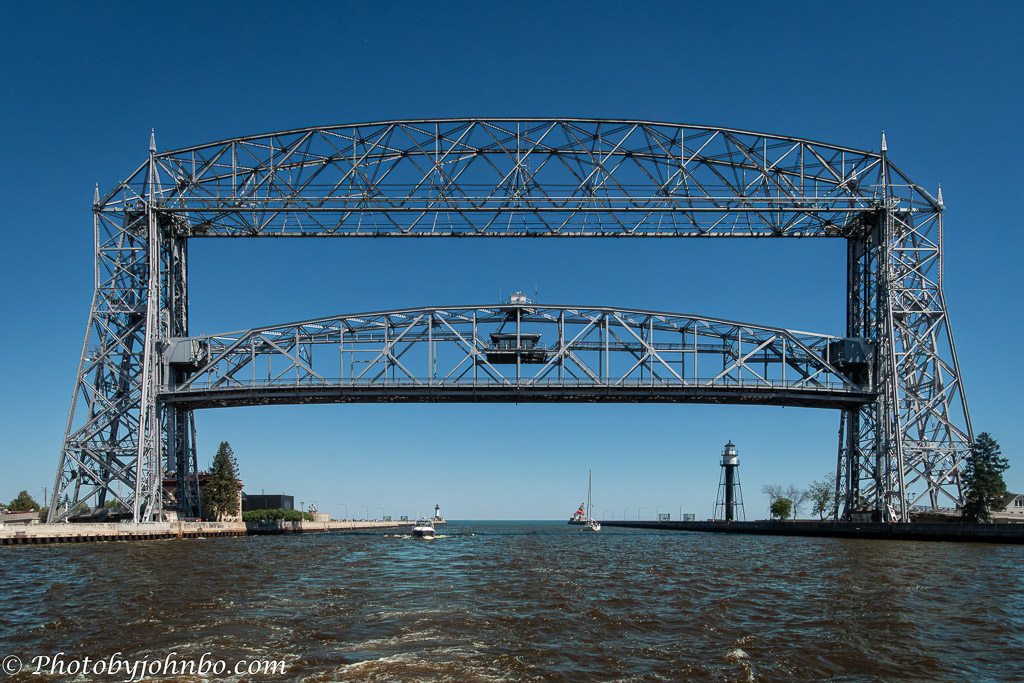
Beth is hosting this week’s challenge, and she picked a topic that I even feature as a category on my site. She writes, “I am excited to be your host this week. The challenge is for you to show us your favorite bridge images. You can feature any kind of bridge: natural bridges, foot bridges, swinging bridges, highway bridges, stone bridges, railroad bridges, or any other kind of bridge you can think of.” You can read her entire challenge post here.
I knew this would be a tough challenge, not because I am short on subject matter, but because of an embarrassment of riches. Using Excire Search within Lightroom Classic, I searched my published photo gallery for “Bridge” and found 327 images to choose from. Many of my favorites have already been shared in a challenge, so I stepped it up a bit. I decided to reprocess some images using Lightroom’s latest masking options. In my opening photo, for example, I selected the subject mask, and Lightroom perfectly outlined the bridge’s structure so I could tweak its clarity and texture.
I chose this bridge to lead my response because it is the only structure in my set with a movable span that allows Great Lakes freighters to enter the harbor. It was first in my mind because next week, we’ll be spending a few days in a VRBO in Duluth, not far from the park at the bridge’s edge. As a vertical‑lift bridge, its span rises to 135 feet (41 m) when fully elevated, and the structure itself dates back to 1905, with its lift conversion completed in 1929–1930. For bridge nerds like me, my original post has more facts and figures here.

In San Antonio, Texas, we took a boat tour on the River Walk canals. As we approached the pedestrian bridge connecting both banks of the canal, I spotted colorful umbrellas over the tables at the River Walk’s oldest restaurant. This small concrete pedestrian bridge, finished with stone accents, spans only about 25–35 feet (8–11 m), just enough to cross the canal without dominating the scene. I have shared variations of this photo in previous challenges. This version is my favorite, enhanced by an impressionist-style filter that adds a painterly vibe.

Christine Falls Bridge is likely Mount Rainier National Park’s most photographed span. A short walk from the parking area leads to a viewpoint where the bridge and canyon walls frame the waterfall. This concrete arch bridge, finished with stone masonry, spans about 35 feet (11 m) and sits roughly 40–50 feet (12–15 m) above Van Trump Creek as it tumbles through Christine Falls. You can read my post about the bridge and where to find it in Mount Rainier National Park here.

Although I have several black-and-white bridge images, none match the construction of this open-spandrel reinforced-concrete arch bridge, which mimics the multi-tiered appearance of ancient Roman aqueducts. For this challenge, I reprocessed the photo in Silver Efex 3 using film‑style Ilford Pan F Plus 50, a 1960s‑era film, to emulate a travel photograph taken at Heceta Head. Heceta Head Beach, the lighthouse, and the 1932 bridge are a short excursion off Oregon Coast Highway US‑101. You can read more about the bridge and the stop along the highway in Oregon here.

I initially considered building a single-city response to Beth’s challenge. Valley City is famously known as the City of Bridges. Reviewing my gallery, I realized many of the bridges I photographed are modern replacements for original spans that outlived their structural capacity. Instead, I decided to reprocess an image of the city’s most interesting bridge: a trestle bridge that still carries traffic across the deep valley today. Completed in 1908, the bridge was built to help trains navigate the valley’s significant elevation changes. The 3,860-foot (1,180 m) span gently lifts trains to the higher terrain on Valley City’s western edge. At its highest point, the bridge rises 162 feet (49 m) above the valley floor. Read my post for more details about this engineering marvel here.

During a 2022 visit to Betanzos, I photographed this bridge, which our tour guide described as the town’s gateway. This multi-span stone masonry arch bridge crosses the Mandeo estuary on five semicircular arches spanning roughly 194 feet (59 m), sitting low over Betanzos’ tidal waters. Originally dating back to 1219, the structure was extensively reconstructed in 1577 under architect Juan de Náveda. When I first wrote about it, I couldn’t find English-language resources online, and I don’t speak Spanish or the region’s native Galician. Fellow Lens-Artist Sofia kindly translated some Spanish-language information about the bridge and shared it in the post comments. Read about my experience on the Cellpic Sunday post here.

For my final selections, I turned to photos captured during the golden and blue hours. In Council Bluffs, Iowa, for an overnight stay, I spotted this railroad bridge when I heard the rumble of steel wheels. I stepped outside to see a freight train crossing the Missouri River. The original bridge opened in 1872 and was rebuilt in 1888, while the current 1,750-foot (533 m) steel truss span has carried trains for over a century. It rises about 62 feet (19 m) above the river. You can read more about the bridge in this Cellpic Sunday post here.

During Mardi Gras season in New Orleans, we boarded a cruise ship at the Mississippi River Terminal. The evening before departure, we soaked up the Big Easy’s energy as we walked the promenade near the dock. In the distance, I spotted two illuminated bridges carrying one-way traffic across the river. The Crescent City Connection is a pair of cantilever steel truss bridges over the Mississippi River. Each span stretches 13,428 feet (4,093 m); the eastbound bridge opened in 1958, and its westbound companion followed in 1988. You can read more about the twin bridges in my Cellpic Sunday post here.

Regular followers of the Lens-Artists Challenges have likely seen this photo before, but I make no apologies. >grin< It’s one of my first day-to-evening conversions. The architectural lighting under the arches and streetlights on the deck inspired me to simulate an hour-ahead shift. I first learned about brush masking in Luminar Neo to add light to the tree on the other side of the bridge deck. The Navarro Street Bridge is a 1921 concrete T‑beam structure carrying Navarro Street over the San Antonio River. It stretches 77 feet (23.5 m) and has a 38‑foot (11.6 m) main span. I posted the original taller view of this bridge—along with the pedestrian arch bridge shown earlier—in my gallery here.

After ten bridge photos, you are probably ready to move on, so kudos if you are still reading. >grin< Thank you for bearing with these reshares of my favorite bridge photos. I took this image before sunrise from the balcony during a cruise arrival in February 2026. The Queen Juliana Bridge connects the Punda and Otrobanda districts of Willemstad and rises high above St. Anna Bay. This 1974 box‑girder structure stretches 1,654 feet (504 m) and rises 185 feet (56 m) above the channel, giving cruise ships plenty of room to pass beneath. I appreciate Beth allowing flexibility in the photo count for a topic that has long provided rich material for my blog.
Thank you to everyone who participated in my challenge last week, “Places Shaped by Water,” as I truly enjoyed seeing everyone’s take on the theme. Ann-Christine hosts next week; follow her here so you don’t miss her post when it goes live on Saturday, September 19, at noon Eastern Time.
Note: Lynn and I will be traveling over the next few weeks for our fall trip, heading toward Duluth and points east. My comment responses may be slightly delayed during this time.
If you’re sharing a Lens‑Artists Challenge response for the first time, welcome—we’d love to visit your post. To participate, publish your take on this week’s theme, link back to this page, and add the Lens‑Artists tag so others can discover your work. You’ll find more details on how the challenge works here.
John Steiner


John, great selection. Mount Rainier Concrete Arch Bridge as a photograph is my favorite.
Thanks, Ritva!
For Cool 😎 I have not seen the Duluth bridge in 60+years , thanks for sharing 😊I think I have seen the Mt Rainier Bridge years ago too but Daddy was in to much of a hurry to go Salmon fishing in West Port, Washington to stop and visit ❗
I’m looking forward to seeing it again next week.
I love bridges, John. Wonderful gallery of fantastic bridge architectures, thoughtfully presented. I love the Navarro Street Bridge and the railroad bridge images.
( I am a huge fan of trains).
Thanks, Suzette! Trains and Bridges go together. Some of the most iconic engineering marvels are railroad bridges high in the mountains.
You are welcome, John. Good point, the railroad was the platform for some of engineering’s greatest achievements.
An embarrassment of riches indeed, John. Beautiful and diverse collection, especially Ponte Vella, Navajo Street, and Cape Creek.
Thanks, Brad!
Wow! What a beautiful collection of bridge images you’ve amassed. Thank you for sharing them with us. Of this set, my favourite is the “Mount Rainier Concrete Arch Bridge” – the architect styled it to perfectly blend into its environment. Of course, the waterfall enhances it, but the bridge is pretty wonderful all by itself. Great post, John! pp
Thanks, Pam! That is a beautiful juxtaposition that the designers completed. They even made the trail extension that allows photographers to frame the falls under the bridge.
Wow John, you’ve crossed a lot of bridges world wide. What a delightful read.
Thanks, Anne! If I haven’t crossed them, my drone has! >grin<
😎
It must have been hard to select these, John and I love your choices. They are all fantastic bridges and so well captured. My favourite is Cape Creek Bridge, your editing skills made that one exceptional.
Thanks, Sofia! That was an edit that taught me about film profiles in Silver Efex. It was fun to see a 1960s-era film style in the list.
Lots of great bridges John 🙂 My favourites are Cape Creek and Queen Juliana I think, but it’s hard to choose!
Thanks, Sarah! I did have trouble keeping the count to 10, but I know that people get tired of scrolling. >grin<
I always have that problem!
Thanks for a wonderful trip visiting these bridges. The photos speak for themselves. The day-to-night conversion amazes me. If you didn’t say you had done that, I wouldn’t have noticed. Well done!
Thank you, Egidio! It was a fun edit. Takes a bit of time, but I enjoy the process.
John, I knew you would have some incredible bridge images and your post went beyond my expectations. You have a great variety of bridges and I can’t decide on a favorite. Enjoy your fall trip.
Thank you so much, Beth!
I love them all John. There are so many interesting bridges here.
Thanks, Leanne!
Love that stone bridge at Mount Rainier John 😀
It is a beautiful frame for the waterfall!
You’ve got an awesome collection John! I really like the falls image at Mount Rainier Concrete Arch Bridge, stunning! Your first one reminded me of many years ago when we were on the Trent Severn water way and went through various locks in the boat!
Thanks, Pamela! This was a fun challenge for me.
Excellent selection and variety – I love the railway and Crescent City
Thanks, Nora!
[…] Lens-Artists Bridges and Six Word […]