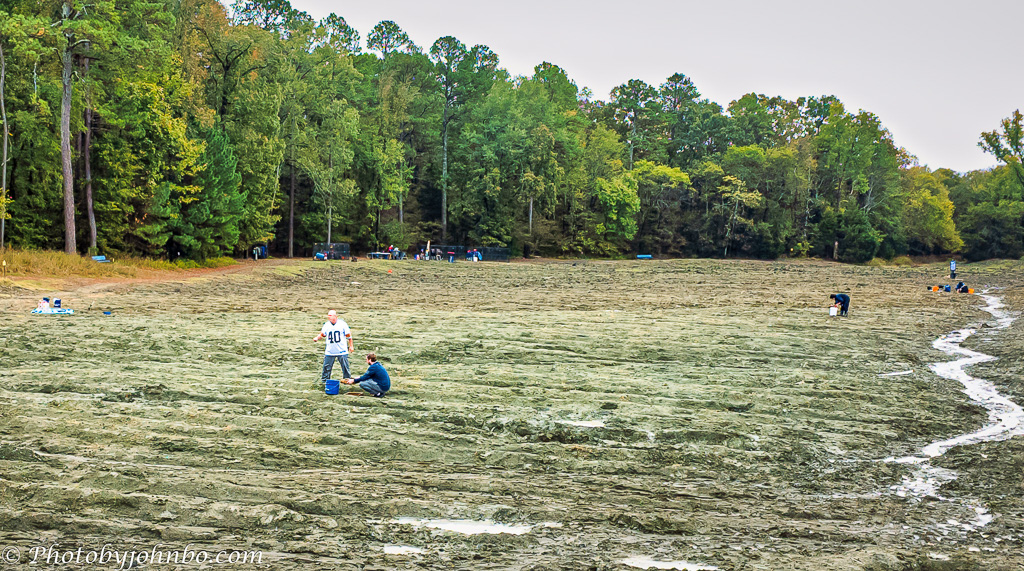
If you plow it, they will come—and on this flat, gray morning, dozens of people were doing exactly that, trudging through the muck with buckets and small shovels in hand.
What drove them to hunt through the dirt? The same thing that drew us—lured by diamonds—it took Lynn, Pat, Gary, and me three separate road trips and three years just to finally set foot out there.
Our first attempt was back in 2023 under even gloomier skies. We stood on the periphery of Crater of Diamonds State Park, debating whether to pay the admission and give it a shot, but a sudden thunderclap made us rethink our optimism. Defeated by the weather, we vowed to try again on our return trip home through Arkansas. Mother Nature had other plans; by the time we reached Murfreesboro that morning, the rain was already coming down in sheets. Knowing the field would be a true ankle-deep quagmire, we scratched the mission a second time.
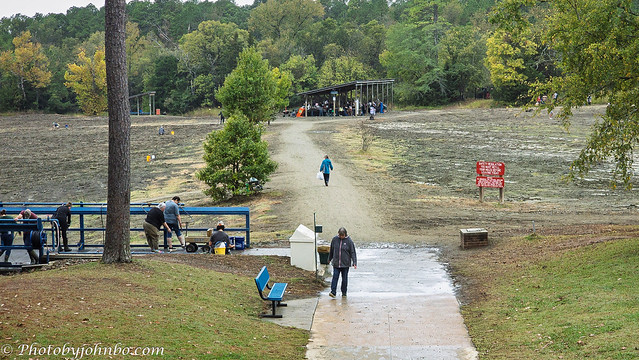
Fast forward to 2025, and the stars finally aligned for our diamond hunt. After we outfitted ourselves with basic tools from the visitor center (about $20 per set) and read placards explaining how to proceed, we walked down the ramp onto the sidewalk leading to the field. As we walked by the washing station, people who’d made their finds were using the water and hose provided to clean up after their dig.
The park has been on Pat’s bucket list ever since she learned the field sits directly atop an ancient volcanic pipe. Standing on the edge of that 37-acre (15-hectare) field, it’s hard not to wonder how a real, active diamond-producing site became a public state park rather than a heavily guarded commercial mine.
So, why are there diamonds here in the first place? Millions of years ago, intense heat and pressure squeezed carbon into diamonds miles beneath the surface. Then, a massive volcanic explosion blasted upward like a supersonic elevator, carrying those gems straight to the top—essentially creating a deep, subterranean conduit of ancient magma. Over time, the volcano’s surface eroded, leaving the heavy diamonds scattered in the dirt, mixed all the way down through the earth.
The story goes back to 1906 when a local farmer named John Huddleston found the first diamonds on this property. Several commercial mining companies have tried over the decades to turn the site into a massive production operation, but they have repeatedly encountered bad luck, mysterious fires, and complex geology, making large-scale commercial processing unprofitable. Realizing the land’s true value lay in its unique history, the state of Arkansas purchased the site in 1972, turning it into the world’s only diamond mine open entirely to the public—with a strict “finders keepers” policy.
And people really do find them. On average, visitors uncover one or two diamonds every single day. Just to show you what’s possible, some massive gems have been pulled from this mud recently:
January 2024: A tourist from Paris, France, stopped by after a torrential downpour and walked away with a chocolate-colored 7.46-carat brown diamond that he found right on the surface. It is the eighth-largest diamond ever found in the United States.
April 2025: A traveler from Minnesota was walking up a hill after a heavy rainstorm and spotted a triangular, copper-colored 3.81-carat brown diamond shining like a piece of tin foil.
January 2026: Two regular visitors were processing a bucket of gravel on TikTok Live when they spotted a massive 6.03-carat canary yellow diamond. It was the size of a gumdrop and stands as the 22nd-largest diamond found since the park opened.
May 2026: A visitor from Pennsylvania was surface-hunting and found a bead-sized, 3.09-carat white diamond glistening right on the surface.

Pro Tip—Wear shoes and clothes you don’t mind getting dirty, and bring basic garden tools like small shovels and hand-weeding equipment to dig through the volcanic soil. When you finish your dig, volunteer docents will tell you about your find. If you are lucky, one of those rocks will be a real diamond.
We didn’t find any diamonds on this trip, but we checked off another item on our travel bucket list. We spent about 45 minutes digging, each gathering a handful of potential diamonds for review. The docent gently told each of us we didn’t find any diamonds, but we did find rocks that would look great after a run through a rock polisher—something one of my great-nephews has on hand. As of this writing, you can purchase tickets for the diamond search area on-site or online via the official Arkansas State Parks website here.
Location: Murfreesboro, Arkansas.
Operating Hours: The Diamond Search Area and its processing facilities are open daily from 8:00 AM to 4:00 PM, while the main Visitor Center and gift shop remain open until 5:00 PM. The park is closed on New Year’s Day, Thanksgiving Day, Christmas Eve, and Christmas Day.
Admission Rates: Tickets are $15.00 for adults (ages 13 and up), $7.00 for children ages 6 to 12, and free for kids under 6.
The Weather Window: Park experts recommend hitting the field 2 to 3 days after heavy rain. The storm naturally washes away loose dirt, leaving heavier, high-luster diamonds exposed on the surface.
Beat the Heat: Arriving right at the 8:00 AM opening gate gives you the first pass at the freshly exposed soil before the midday sun makes the wide-open field uncomfortable.
Multi-Day Stays: Keep in mind that admission tickets are valid for one day only. If you are staying nearby or camping in the park and want to search over multiple days, you will need to buy a separate ticket for each day you enter the field.
About the photos: I captured the images with the Samsung S25 Ultra in JPG mode. I processed the two views of the diamond field in both Lightroom Classic and Luminar Neo. The opening image improved the most with additional processing using Neo’s Light Depth tool and Lightroom’s Super Resolution. Because of a severe crop, doubling the linear resolution was essential to bring the final image back to crisp, presentable dimensions. The gallery and metadata are available in 2K HD here.
John Steiner.

