July 4, 1776.
Boston, Philadelphia, Washington, D.C.
Note: We are traveling again with limited Internet access. Feel free to comment, but I may be slow to respond.
A fresh look at familiar icons to honor the nation’s 250th anniversary, this collection revisits earlier travel photographs with the benefit of modern tools and a more practiced eye. From Boston to Philadelphia to Washington, D.C., these shots from America’s founding era received a fresh look with modern editing techniques while keeping the history intact.
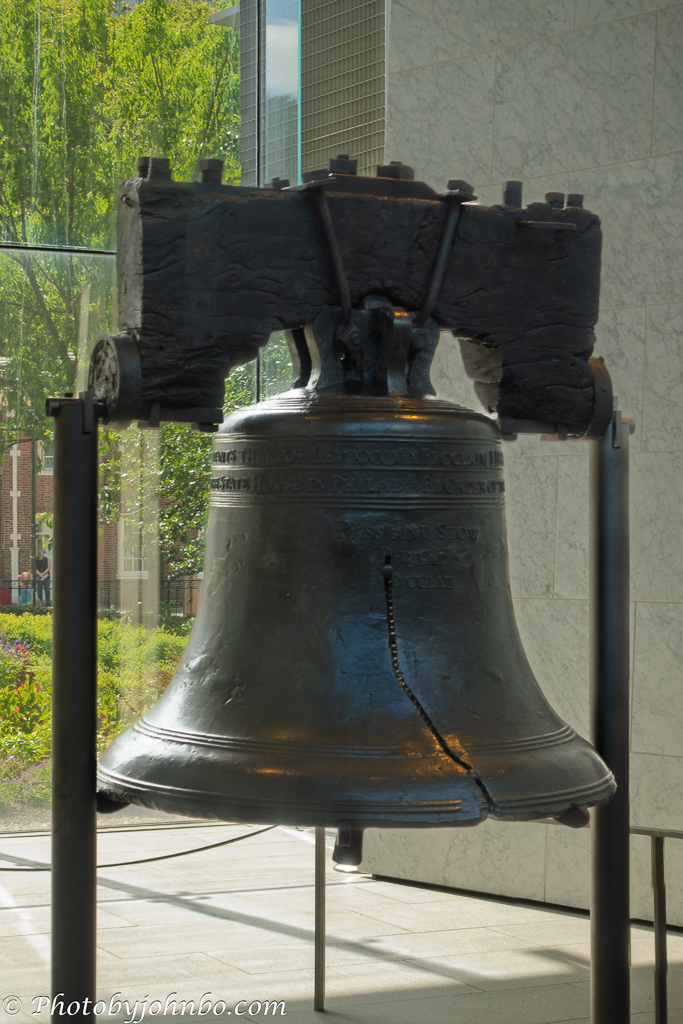
The Liberty Bell is housed in a beautifully designed building in Philadelphia, Pennsylvania. Its image has graced coins and become one of the strongest symbols of American independence, but its symbolic reach extends far beyond legal tender. Over the years, the Liberty Bell has been adopted by abolitionists, women’s suffrage advocates, and Civil Rights leaders as a rallying emblem for equality and freedom. It has appeared in political cartoons, patriotic posters, World’s Fair exhibitions, and even Cold War–era messaging, each time reinforcing its role as a national icon of liberty.
This image was captured in 2022 with a Sony RX100M5. The strong backlight from the morning sun pouring through the window behind the bell required a three‑bracket exposure to give the camera’s tiny sensor enough dynamic range to capture both deep shadows and bright highlights. For this re‑edit, I returned to the DNG file produced by Lightroom Classic 2026’s HDR module and used its modern masking tools to isolate the key elements more precisely than before. An object mask allowed me to reduce the background exposure by one stop, while a subject mask lifted the bell by about 1.5 stops to bring out its form and texture. That created a noticeable halo along the right edge, so I used a soft brush mask to gently lower the exposure in that area until the transition blended naturally with the light streaming through the window.

In 2012, we visited Boston, Massachusetts, and walked the Freedom Trail. Along that walk, I caught a view that showed exactly how these Revolutionary War historic sites sit right alongside modern city architecture. The Old South Meeting House in Boston played a pivotal role in the early stirrings of the American Revolution. Built in 1729 as a Puritan house of worship, it soon became the largest gathering space in colonial Boston and a natural venue for public debate. It was here, on December 16, 1773, that thousands of colonists crowded inside to protest the Tea Act, and where Samuel Adams gave the signal that sent the Sons of Liberty to Griffin’s Wharf—the moment that ignited the Boston Tea Party. Over the years, the Meeting House became a symbol of free speech and dissent—a great example of how the fight for independence started in crowded rooms with ordinary citizens, long before the first shots were fired on a battlefield.
This photo was taken with my first DSLR, back when I knew just enough to shoot RAW but not much more. Revisiting it now with Adobe Lightroom Classic’s modern masking tools made all the difference. First, I corrected the vertical lean that I didn’t know how to fix in the original edit. Then, I divided the scene into two distinct masks—one for the brickwork of the Meeting House and another for the glass-and-steel skyscraper behind it. The brick received only a light touch: a hint of clarity to bring out texture and a subtle five‑point warm shift in hue to echo the building’s historic character. The skyscraper, by contrast, benefited from a cooler treatment; lowering the Temp by about 15 points gave the steel and glass a crisp, modern tone that plays well with the warm colonial brick. The result preserves the original moment while giving each element a more intentional visual treatment.

Historical reenactors have become a familiar presence in Boston, especially along the Freedom Trail, where they help bring the Revolutionary era to life for modern visitors. Dressed in accurate uniforms and trained to portray daily life in the 1770s, these interpreters give visitors a real glimpse into the world of British regulars and colonial citizens. Their role is to preserve the atmosphere of the period as faithfully as possible—right down to avoiding modern accessories when they’re in public view. So when I spotted a red‑coated British soldier tucked inside a pub, discreetly using a cellphone hidden behind his fingers, it was a reminder that even the most dedicated reenactors occasionally need a moment of twenty‑first‑century convenience. Apparently, even though the British had access to modern cellphone technology, they still lost the war. >grin<
This photo might be the most improved image in the entire gallery. Even though I had already discovered the benefits of shooting RAW, I was still relying on autofocus for everything, which meant the window dividers were tack‑sharp. At the same time, the reenactor behind them was anything but. The first challenge was dealing with the heavy reflections in the glass. Lightroom’s Remove Tool handled this beautifully. Using Remove > Distractions > Reflections, several bright patches on the red coat vanished instantly, yet it left just enough edge reflections to preserve the sense of a real window between us. Once the distractions were under control, I sent the image to Luminar Neo’s Supersharp module, which remains far better at recovering soft focus and motion blur than Lightroom’s sharpening tools. By masking the soldier and applying sharpening only to him, I was able to recover a surprising amount of detail. The technology isn’t perfect, but it elevated the image far beyond what was possible when I first processed it—back before Neo even existed.

Boston was where the Revolution began, but Philadelphia is where the United States was born. This is where the seeds of liberty took root and began to grow into a national identity. Tucked into a narrow street in the Old City, the Betsy Ross House is one of the most recognizable spots from that early story. According to tradition, it was here that Betsy Ross—an upholsterer by trade—was asked by a committee that included George Washington to sew the first American flag. Whether every detail of the legend is verifiable or not, the house has become a touchstone for the idea of a nation stitching itself together from thirteen distinct colonies into a unified republic. It’s a great little spot that shows how the American story was shaped by the work of ordinary citizens, not just by famous debates in grand halls.
When traveling through Philadelphia in 2022, I carried the small Sony RX100—tiny sensor and all—for its light weight and its ability to avoid the “big‑camera” attention. By then, I bracketed nearly everything, especially with the Sony, choosing a single frame only when the dynamic range allowed it. This scene needed all three exposures—the bright white of the house and the deep shade under the tree demanded it. Wanting to avoid a heavily processed look, I skipped masking entirely and focused on composition. A square crop minimized the large building on the right and let the house sit comfortably beside that beautiful tree. From there, only global adjustments were needed: lowering highlights by 5 kept the white shutters in check, raising shadows by 10 brought detail to the tree’s shade without making anything glow unnaturally, and adding 10 to Texture and 5 to Clarity helped the brickwork stand out.

The history of this building is intertwined with the Founding Fathers and their work in shaping a democratic republic. Inside these walls, delegates debated, drafted, and ultimately adopted both the Declaration of Independence and the U.S. Constitution—two documents that defined the nation’s ideals and its governing framework. Today, Independence Hall is more than just a preserved landmark; it’s the actual room where the American experiment took its first deliberate steps.
On our visit to Independence Hall, I took several exterior photos with the Sony and a couple with my phone. When reviewing images for this project, I first tried to salvage the only one I had ever published—a close shot of George Washington with a steep upward angle toward the clock tower. I spent a long time trying to correct the exaggerated lean, but no amount of modern Photoshop or Lightroom Classic magic could fix a composition that was flawed from the start. Instead, I chose another Sony image from the set and finally processed it properly. Using Perspective Upright and the crop tool brought the building’s walls vertical, leaving only a slight backward lean in the tower—a natural effect when photographing tall structures from below. From there, the refinements were simple: a subject mask to add clarity and a touch of exposure to the statue, and a quick removal of a small distraction in front of the building that pulled attention away from its historic character.

In 2011—the year I retired and finally began traveling in earnest—Lynn and I visited Washington, DC, playing tourist and taking in as many historic sites as we could. During a nighttime tour, our bus stopped at the Jefferson Memorial, a fitting place to reflect on Jefferson’s role in the nation’s early push for independence. As the principal author of the Declaration of Independence, he shaped the language that expressed the colonies’ case for self‑government. He helped define the ideals that guided the founding generation. Visiting the memorial today makes you realize just how much of the American story started with the power of a few well‑chosen words.
This pair of images from Washington, D.C., was the toughest challenge in the entire reimagination series. They were captured with an early‑2000s Kodak Z812 IS, a digital camera whose small sensor produced a massive amount of color noise in almost every shot. I threw everything I had at this file—Lightroom Classic and Luminar Neo alike—and even with all that 21st‑century software, the flaws remain visible. Because the image is a JPEG, Lightroom’s Denoise wasn’t available, so I relied on Luminar Neo’s Noiseless tool for luminance noise. It helped, but it took Lightroom’s Color Noise Reduction to tame the chroma noise, and even then, it couldn’t be pushed too far without turning the image “plastic.” Neo’s Object Selection mask let me isolate the dark sky and lower its exposure enough to hide most of the remaining blotches. A subject mask on the statue allowed Neo’s sharper toolset to clean up what looked like motion blur—though I’m fairly certain the statue didn’t move. Back in Lightroom, a mix of color balancing, distraction removal, and exposure tweaks brought the scene into balance. This reimagination is a reminder that modern tools can only go so far when the original file offers little.

The Washington Monument is one of the most recognizable symbols in the capital, a towering tribute to George Washington’s leadership during the Revolution and the early years of the republic. Its clean marble obelisk—ringed by fifty flags—honors George Washington’s role as both commander of the Continental Army and the country’s first president. Construction began in the mid‑1800s, paused during the Civil War, and wasn’t completed until 1884, leaving a subtle color shift in the stone that still marks the point where work resumed. Today, the monument anchors the National Mall, marking the history of the leadership that carried the nation from the Revolution to its first years of self‑government.
This photo, also captured with the Kodak Z812 IS, carries the same color noise that plagued sensors of that era. The sky was especially stubborn—modern tools could reduce the noise, but not remove it cleanly. With the monument’s crisp lines and that wide expanse of sky, a sky replacement became the most natural solution, and Luminar Neo handled it well. Out of the dozens of skies in my library, only two didn’t overpower the scene; this one, with its gentle gradient and thin clouds, complemented the monument without stealing attention. I removed a few people near the sidewalk on the left, and Lightroom’s tool left behind faint shapes that looked like tourists in the tree’s shadow—an accidental bit of realism I decided to keep. A radial mask on the lawn helped tone down a bright patch of spring grass, and a light linear mask above the ring of flags added just enough clarity to bring out hints of red, white, and blue. At full magnification, the flags are barely defined, but that small boost lets the eye read them as flags, even when the pixels don’t fully agree.
As our nation marks the 250th anniversary of its independence, I hope this gallery of historic sites helps shine a light on the ideals our Founding Fathers worked so hard to define. Thomas Jefferson expressed those ideals best in the Declaration of Independence: “We hold these truths to be self‑evident, that all men are created equal, that they are endowed by their Creator with certain unalienable Rights, that among these are Life, Liberty, and the pursuit of Happiness.”
I usually end my posts with an “About the Photos” section, but that would be redundant here. Modern digital cameras and today’s powerful editing software are simply the tools of the contemporary photographer—tools that continue to grow in capability and artistic potential. You can view all of these images in 2K HD, along with the earlier versions of each photograph, on my Flickr site here.
John Steiner.


John, thanks for taking us on a tour to all of these important historical places with your great images and text. I hope you are enjoying your trip.
Thank you for reading! Trip is soon well. Flights arrived on time and no lost luggage! >grin<
True! Lightroom is heavenly! I too get a lot of benefit from the use of Lightroom with my old photographs. Auto focus is also a blessing to us with poorer eyesight.
Indeed! Thanks for your comment!
Thanks for the tour, reminding us of our Nation’s history and the part Thomas Jefferson played. I think he was the most forethinking of our founding fathers. Your photos are also beautiful reminders.
Thanks, Anne! Lots of history in those cities!
👍
An interesting write-up of these new edits John – it would have perhaps been even more so if you had included the older versions of the shots so we could compare???
Thanks Sarah! I posted the originals and the images side by side on my Flickr site at this link, Copy and paste into your browser.
Ah yes, interesting! I think the South Meeting House and the Reenactor have particularly benefitted from your revised editing, but all show improvements 🙂
A great tour of these important symbols. Beautiful photo work!
Thanks, Egidio! I enjoyed trying to process those oldest JPG files the most, they are quite a challenge.
That reenactor sneaking a cellphone behind his fingers made me laugh out loud — proof that even the most committed period costume can’t survive a quiet moment in a pub. I love the whole idea of returning to old travel files with a more practiced eye; we’ve got a decade of trip photos we barely knew how to shoot at the time, and it’s tempting to give a few the same second life. And the Old South Meeting House point really lands — the Revolution starting in crowded rooms of ordinary people, not on a battlefield. Safe travels wherever the limited-wifi road is taking you.
Thank you! That photo was taken in 2012, and cellphones were a lot easier to hide back then. I’d never be able to hide my S25 behind my hands. >grin<
Lately, I’ve been thinking more about reprocessing since the masking tools have improved so much. I’m glad you enjoyed the sequence.
A wonderful July 4th special of colonial America. We were in Philadelphia in 2022. Hope you had a great 4th.
Thanks, Dan. It was fun recreating these old photos.