February 2026.
George Town, Grand Cayman Island.
In February, we visited Grand Cayman Island for an excursion called Highlights, Hell & Seven Fathoms Distillery. The tour promised a taste of the island’s iconic rum—aged in barrels stored seven fathoms beneath the ocean—along with a stop at a second distillery known for its rum‑infused treats. We also made our way to a jagged ironshore formation the locals call “Hell,” a landscape so other‑worldly it feels like a trip to another realm.
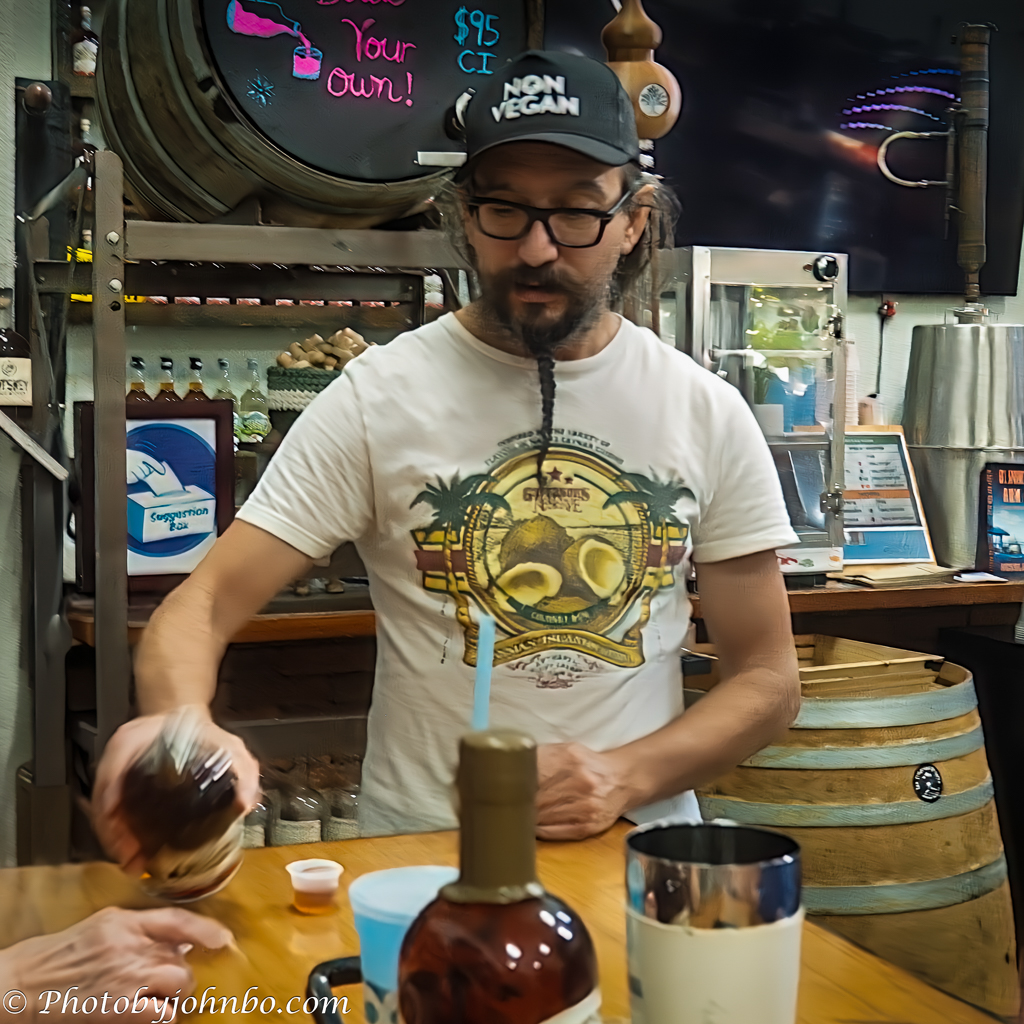
After a short drive to the Seven Fathoms Distillery, we stepped into the small distillery’s tasting room. The room was thick with the rich scent of molasses and toasted oak. Our host explained the unique underwater aging process before pouring our first samples into plastic cups.

Our taster host had a lively sense of humor and delivered the tour with the easy charm you expect in the Caribbean. He explained that Seven Fathoms Distillery ages its rum in pre‑used bourbon barrels, giving the spirit a head start on flavor before the aging begins. Once filled, the barrels are sealed and lowered seven fathoms—42 feet (12.8 meters)—into the Caribbean Sea, where they remain for several months or, in the case of some expressions, even longer. Constant motion, pressure, and temperature shifts at that depth accelerate the aging process in ways a warehouse can’t replicate. When the barrels are finally retrieved, the rum is blended and bottled, resulting in a surprisingly smooth spirit with excellent depth.

On the wall above the tasting room cabinetry, an artistic representation of a still and a diver caught my eye. Before entering the actual distillery room, our guide explicitly noted that no photos of the equipment were allowed. We filed in, and he repeated the reminder once more before beginning his explanation of the machinery and the process. After a brief walkthrough, he led us back to the tasting room and gift shop to browse bottles and accessories.
Not two minutes later, someone in our group snapped a photo of the equipment anyway. While our guide stayed perfectly pleasant, he firmly insisted that the image be deleted right then and there. It’s common courtesy: when a business opens a space containing proprietary equipment and posts “No Photos” signs, guests are expected to respect the rules. To the person’s credit, the photo was deleted immediately. It may simply have been an example of someone listening, but not hearing.

Back on the bus, it was only a few minutes before we pulled into the parking lot of the Tortuga Rum Company. The tour began with a viewing area above the distillery, where a guide escorted us upstairs to look down on the equipment used to produce their spirits and the fully equipped bakery where Tortuga’s rum‑infused treats are made. Just before we stepped into the viewing hall, I spotted another sign: “No Photos Please.”
When we were just leaving the viewing area, another group of cruisers from our ship was filing in behind us. We were directed down another flight of stairs, where we lined up to sample a few of Tortuga’s baked goods. Outside the entrance, a trio of pirate figures stood guard. After a quick taste, it was a good moment for me to step outside and enjoy the warm Caribbean air while others browsed the shop.

I didn’t get a chance to photograph some of the most interesting parts of the rum‑making process, but between the pirates at the entrance and this vintage truck, there’s still plenty to point a camera at when visiting the Tortuga Rum Company. The old truck, sheltered under a bright orange canopy, shows how a single cask of rum might once have been hauled across the island. Inside the gift shop, stacks of Tortuga’s signature six‑sided rum‑cake boxes caught my eye—instantly recognizable from souvenir shops throughout the Caribbean and on cruise ships.

As we boarded the bus, we were already anticipating the next stop on our tour. Our route followed the coastline for a while, but from my seat, I had only inland views—quiet island homes and pockets of greenery instead of the shoreline. The ride was short, only about 15 minutes from George Town to West Bay, but our driver kept us entertained by pointing out the notable places along the way.

As we rode along, I noticed the familiar circular speed‑limit signs marked in kilometers per hour. But one sign caught my attention—a triangular “Give Way” marker. The shape was familiar, but “Give Way” always sounds distinctly British to my ears. Unfortunately, utility poles and roadside traffic signs were about all I could see from my side of the bus, rather than the idyllic coastal views I wanted to capture. Between the forbidden distillery interiors and my unlucky seating choice, it seems I couldn’t photograph anything I really wanted to. >grin<

As we pulled away, I could almost imagine our driver adjusting his headset and deadpanning into the mic, “OK, everyone, now I’m going to Hell, and taking you all with me.” While that specific phrase was just a figment of my imagination, his actual conversational style was a highlight of the trip. He navigated the northwest route toward West Bay with an easy, professional flair, pointing out landmarks and sharing island history through his headset. We were definitely in good hands as we left the sweet “spirits” of the distillery behind for a destination that promised to be a bit more… scorched. Next week, Part II of our Grand Cayman Island experience.
About the photos: All images were captured with the Nikon Z7 II and the Nikkor Z 28–400mm f/4–8.0 VR lens, then processed in Adobe Lightroom Classic. The opening image was shot at 1/13 second at ISO 800 to compensate for the low light in the tasting room and to capture a hint of motion blur in the pour. Unfortunately, my hold on the camera wasn’t steady enough, so the entire image picked up a bit of motion blur. After running Denoise, I sent the file to Luminar Neo’s SuperSharp module to reduce blur across the frame, knowing the extreme blur in the bottle itself wouldn’t be “fixed.” I cropped the image to a square to remove partially visible people at the edges, then used Photoshop’s Generative Fill and layer tools to eliminate distractions on the far left.
The rest of the images were straightforward: Denoise for the indoor shots, Adaptive Profile, and adjustments to Highlights, Shadows, Whites, and Blacks to maximize dynamic range. The full gallery, along with complete metadata, is available on my Flickr site here.
John Steiner.


Gosh, John, you’ve an incredible talent for story-telling and the sharing of history in the most interesting way possible. I loved this post, thank you so much! pp
Pam, I really appreciate your comments on my writing! In my early posts, I focused mainly on the photography and simple storytelling.
Now, using AI to help research locations allows me to bring in much richer background information. As a history major in college, I’m finding it so much more fun to dig into and tell those historical stories.
Aaaah! A history major! I ought to have known. No wonder you’re so good at it! 🙂
What a wonderful tour. Thanks for taking us along and for the history lesson.
It was, indeed!
😎
It’s been a while since I’ve been to the Caymans, but I certainly remember visiting those distilleries.
A fun excursion.