August 2025.
Glyndon, Minnesota.
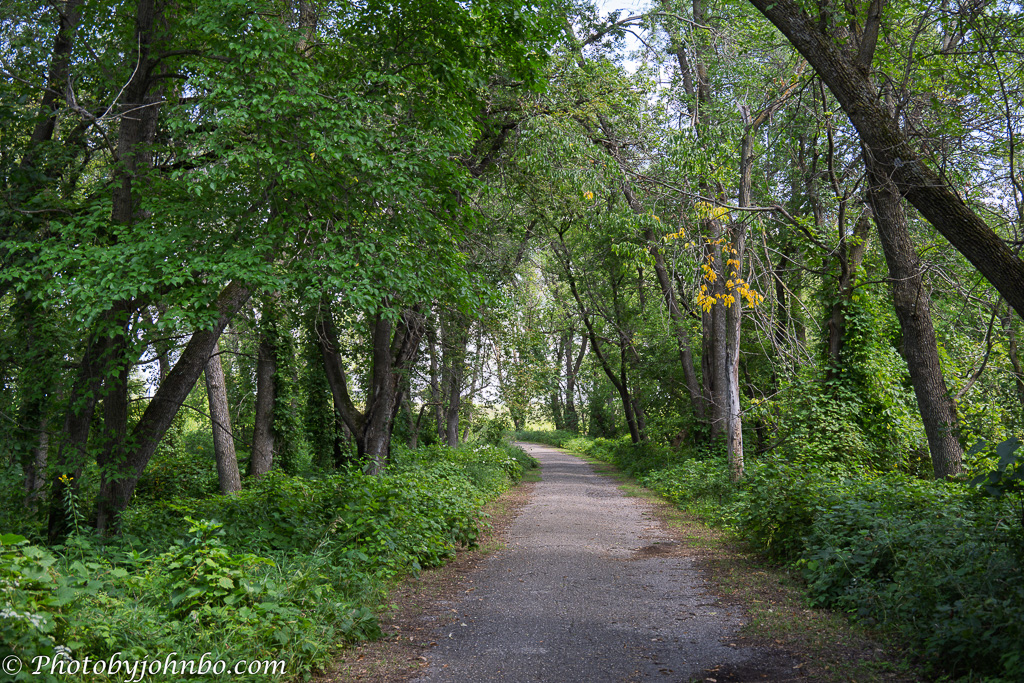
One of my greatest pleasures is taking photo walks with Lynn and my grandson, Owen. He and I have explored parks, downtown street life, museums, and other places in and around our community since Owen acquired a used Nikon D7000 and 55-200mm zoom lens. On one of our outings in 2025, we ventured to Buffalo River State Park, not far from our homes in North Dakota. The park features trails winding through the woods, snaking along the Buffalo River, and leading to the tallgrass prairie ecosystem of northwestern Minnesota. After entering the park, we headed down the short paved trail into the woods near the river. The wide variety of trees in the park is a naturalist’s textbook on woodland ecology. But we are not ecologists; we are photographers bent on finding landscape views and maybe some wildlife, if we are lucky.

As we ventured deeper into the woods, I was struck by this fallen tree. Though one of my “pet peeves” in reading is the personification of inanimate objects, I often see human likeness in nature. In this case, the falling tree looks as if it let out a scream as it toppled over. When I come across shapes like this, I usually make a point to capture the image.

On this day, our wildlife views were on the small side. There were plenty of bees to photograph, and another pest not pictured here that got the best of us. In the woods near a river, Minnesota has its share of Aedes triseriatus and Culex tarsalis, two of the common mosquito species in these shaded corridors. Before we got very far along the trail, we found ourselves under attack—Owen and I with our Nikons, and Lynn with her Samsung cell phone. Taking photos was impossible. We quickly retreated to the car, where I was sure we had mosquito spray—well, not so much. The can was nearly empty, offering only a few dribbles from the nozzle. We headed back to the ranger station at the entrance, where we were rewarded with a fresh can of spray, at a premium price, of course. Now well‑armed to do battle with the mosquitoes, we returned to the woodland.

Back on the trail, we retraced our steps and ventured near the water. The mosquitoes were within hearing range, but they kept a respectful distance from our slathered skin. At one point, Owen saw something to photograph, and I captured him using the back of the camera as a viewfinder. That must be a generational difference between the cell phone generation and us old-timers who long for a viewfinder. Meanwhile, the river flowed gently beside the trail, adding the soft, steady sound that always seems to accompany a woodland stream.

As we walked along, the woodland receded, replaced by tallgrass prairie. Winding around a natural oxbow, the Buffalo River’s path is full of subtle bends, sandbars, and scattered rocks. Its water is tinted tea‑brown, typical of prairie rivers, stained by tannins from leaves, grasses, and the surrounding wetlands. Along its banks, dense vegetation crowds the edges: willows lean toward the water, while boxelder and elm form the backbone of the woodland just beyond, and tall grasses brush the shoreline.

As we left the woodland, a tree told the story of the forest’s circle of life. This old, weathered stump is still alive, its last cluster of green leaves still supplying the energy and nutrients that keep the remaining trunk going. But something more ominous is happening. Vines at the base are slowly climbing upward, tightening their grip. In time, they’ll overtake what’s left, and nature will reclaim the structure piece by piece.

As we walked along the trail, signs announced its transition to Minnesota prairie ecology. The immediate neighbor to the park is the Regional Science Center (operated by Minnesota State University Moorhead), an education and research facility dedicated to the tallgrass prairie. It serves as the gateway to the Bluestem Prairie Scientific and Natural Area (SNA), one of the largest remaining tracts of native tallgrass prairie in Minnesota. Walking through the tall grass, I noticed a lone tree standing above the meadow, its branches bare. Its circle of life completed, I found myself wondering how this solitary tree lived and died so far from its woodland neighbors.
Buffalo River State Park is an easy drive from the Fargo–Moorhead area for us and offers a mix of woodland, river corridor, and tallgrass prairie, making it worth a return visit. The park is open daily from 8 a.m. until 10 p.m., with a modest vehicle fee at the entrance. Current hours, trail updates, and seasonal information are available on the Minnesota Department of Natural Resources website. We left our photo walk with images from the woods, the stretch of prairie grasses, and a Minnesota river—a small collection that reflects a bit of the state’s natural heritage.
About the photos: All images were captured with the Nikon Z7 II and Nikkor Z 28–400mm f/4–8 VR lens. I processed them in June 2026 using Adobe Lightroom Classic, mostly with Adobe Color or Adobe Landscape profiles. I used the improved object masking on the river photos and the “screaming” tree, which let me fully separate the subjects for more targeted adjustments. The June update to Lightroom Classic brought better masking tools, so I’m not jumping into Luminar Neo as often, but I still use Neo when I want to take an image in a more creative direction. You can check out the images in 2K HD and inspect the photo metadata on my Flickr site here.
On Thursday, September 10, a special post features Owen’s perspective on our shared experience. On or after September 10, 2026, you can visit the post here.
John Steiner.


Beautiful
What a fabulous trail John and glad you were able to find some more spray for those pesky mosquitoes! 😊
Indeed. We were so happy to see them in the ranger station at the entrance! Thanks, Xenia!
Awesome trail photos John
Thanks, Pamela!
What a beautiful walk John, and made special by sharing it with Owen.
It certainly was, Anne. On Thursday, I’ll share Owen’s perspective. This was a fun project.
I’m looking forward to the post!
It looks like a great park to have nearby John, and kudos on sharing it with your grandson.
Indeed, it is. Owen enjoys photography. Thanks!
Lovely tale and images and I, too, am definitely an old timer – I cannot function without a viewfinder! Hence my enormous difficulties with cell photography. Mental block? Likely. Nevertheless…
Best pic, without a doubt, is the first one – there’s nothing so alluring as an image of a trail disappearing around a bend.
Great post! Can’t wait for Thursday’s.
Thanks! I use the back of the camera at times, but most of the time, it’s eye up to the viewfinder for me!
Great way to spend time and enjoy your grandson
The park is so lush and peaceful–not counting the mosquitos. As for the viewfinder, I like the LCD screen, but I seldom use it because I want to save my battery (although I carry extras). Go figure.
I have more of a problem with not being able to see the LCD screen, especially on those bright, sunny days. But I do enjoy the freedom to tap on the screen at a point to focus on that spot.
[…] On our photo walk at Buffalo River State Park, Owen and I moved through the park’s varied landscapes, each of us with our own perspective and a camera to tell the stories of our walk. In this week’s Tuesday Trek, I shared my perspective. If you missed part 1 of our journey, you can find it here. […]
John, You captured some beautiful photos and made some happy memories on your photo walk with Lynn and your grandson Owen. I really enjoyed seeing the trails at Buffalo River State Park. We camped there for one night on our way to Itasca State Park in 2011. We didn’t have time to do any exploring.
Thanks, Beth! Over the years, we’ve taken the short drive from Fargo… and usually we remember the mosquito spray. >grin<