This week, Tina challenges us to share cell phone photos. She writes, “As I put together this week’s challenge, it occurred to me how rarely I shoot with anything other than my iPhone these days. As such, I thought it might be fun to post specifically about phone photography, which has come such a long way these past few years.” You can read her entire challenge post here. Before diving into my response, I owe an apology for falling behind on this week’s entries. We’ve been on the road—making our way back to Fargo from our winter stay in Tucson—and took extra time to visit with family along the way. When we weren’t catching up with family news, I was staring out the window, watching the miles roll by. I’ll be catching up with everyone’s posts over the next couple of days.
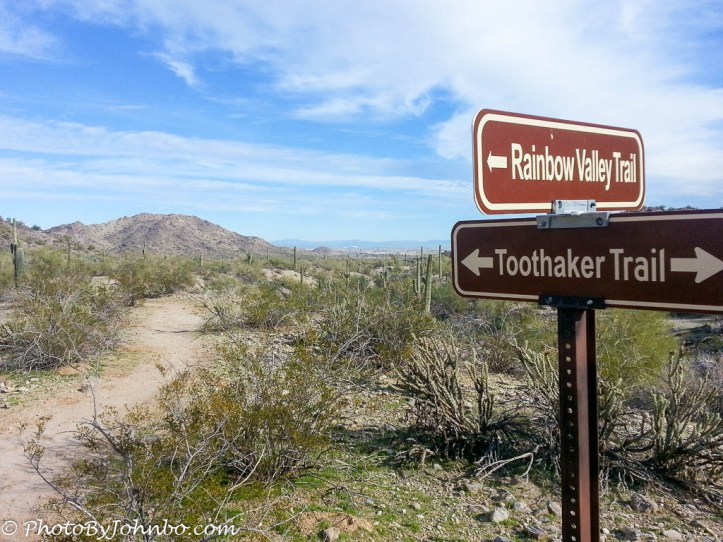
Regular readers know I’ve long kept up with cellphone technology—upgrading every couple of years, and inevitably chasing the “latest and greatest.” It’s been more than a decade since I first introduced Cellpic Sunday here on the blog. You can read that inaugural post from June 21, 2015, here. My opening photo for this week’s challenge goes back even further: it was captured in Estrella Mountain Regional Park in Goodyear, Arizona, in December 2013. I took it with the Samsung SCH‑I535, the Verizon variant of the Samsung S III, and my first true camera‑capable phone. The Regional Park staff later selected the image as the background for certificates awarded to hikers who completed their “100 Miles in 100 Days” challenge. Lynn and I earned our own copies the hard way—we finished the challenge ourselves.

Skipping ahead to 2023 and a transatlantic cruise, one of our ports of call was Mindelo on the island of São Vicente in Cape Verde. For this challenge, I decided to limit myself to photos I’ve never used in a Lens‑Artists post, which meant skipping several generations of cell phones—apparently, many of my favorites have already appeared in past challenges. This image of a deckhand preparing to secure the pilot boat so the port pilot could board the Norwegian Star was taken with my then‑new Samsung S23 Ultra in March 2023, during our Rio‑to‑Barcelona crossing.

Our last island stop on that crossing was Ibiza, one of the Balearic Islands and an autonomous territory of Spain. The lighthouse in my photo is the Far de Botafoc, perched on a rocky point near the Port of Ibiza, where our ship docked. Like many lighthouses today, it remains active, though GPS navigation means it’s no longer essential as a primary aid to mariners; instead, it stands as a historic sentinel marking the harbor entrance. I captured this image from an upper deck of the Norwegian Star with my Samsung S23 Ultra at about 1:30 PM, when the harsh midday sun did the scene no favors. To soften the light, I turned to Luminar Neo’s Twilight Enhancer, which darkened the exposure and gave the image a subtle blue‑hour feel. I then used Neo’s Sunrays tool, placing the sun at the center of the lantern room and limiting the effect to two rays to emulate the beam that might once have swept across the water. This photo was taken on April 2, 2023—exactly three years before the day of this publication.

By February 2024, I had finally learned to take full advantage of Pro Mode on my then‑new Samsung S23 Ultra. Pro Mode saves both DNG and JPG files, giving photo‑editing apps access to the wider dynamic range and richer RAW data stored in the DNG version. On the evening before we departed New Orleans on a Caribbean cruise, we walked along the Mississippi River shoreline, and I captured this image of the twin bridges connecting New Orleans’ West and East banks. I often rely on my cell phone for night photography—its automatic exposure system frequently produces cleaner, more balanced images than my “fancy” Nikons.

Even though I had both a Nikon D500 and a Nikon Z7 II with me on our trip to Kruger National Park, I still wanted to bring home a few images suitable for Cellpic Sunday. Whenever an animal wandered close enough for the Samsung S23 Ultra’s rear telephoto camera to handle the shot, I switched to Pro Mode and captured a DNG file for maximum flexibility. This image of a female elephant was processed later in Adobe Lightroom Classic and Luminar Neo, where I cropped the image and added a subtle dark vignette to draw attention to her presence in the frame.

Sometimes the best camera is simply the one you have within reach. In Hawaii, looking out the glass door from the bedroom, I saw a Cattle Egret settled on a trellis just off our deck, posing perfectly in the backyard of our rental. I could have pulled out the Z7 II and maybe captured a sharper image, but there was every chance the egret would take off before I returned. Instead, I eased the sliding door open just enough to avoid shooting through the glass, hoping the sound wouldn’t startle my subject. Fortunately, the egret stayed put long enough for several frames. For reasons I can’t explain, Flickr isn’t displaying the camera and lens details for this shot—apparently, the metadata was stripped somewhere in my editing workflow between Adobe Lightroom Classic and Luminar Neo.

My last two images feature a couple of cell phone tricks. In August 2023, during our visit to Great Sand Dunes National Park, I used one of my favorites—pairing a cell phone with a public telescope. The idea is simple: use the telescope to find a distant subject (in this case, the long line of hikers making their way up the dune), then carefully bring the phone’s active lens up to the eyepiece without bumping the scope. If your phone has multiple lenses, you’ll quickly discover which one is in use by moving each lens in front of the eyepiece until the telescope image appears on the screen. A steady hand is essential; even a slight shift can cause the image to vanish because the lens must be perfectly centered over the eyepiece. It takes a bit of practice, but once you get the hang of it, it’s a great way to extend your phone’s reach. I left this version cropped as a square so you can see the circular outline created by the telescope, though it’s easy enough to crop the circular edge away in post if you want to keep the trick to yourself.

True confession time… I didn’t take this photo; it was made long before I ever picked up a camera. My nephew, Allan, was sorting through images from my brother Vern’s collection when he came across my brother Joe’s black‑and‑white wedding portrait. Allan photographed the old photo with his iPhone 16 and shared the image with me. I ran it through the Restoration Module in Luminar Neo to colorize the nearly pristine original from seven decades ago. The result was beautiful—Neo added a gentle sepia warmth that feels right at home with photographs from that era. From left to right are a cousin, Mel; my brother Vern, the best man; my brother Joe, the groom; and his lovely bride, Dorothy. Sadly, I don’t know the names of the two women on the right end of the photo.
That’s all for this admittedly late response to Tina’s challenge. Thanks to Egidio for hosting last week’s challenge on seeing the color in black-and-white photos. Next week, it’s Patti’s turn to host the challenge that goes live on Saturday, April 4. Be sure to follow her here so you don’t miss the challenge. If you’d like to join the challenge, a guide to getting started is here.
John Steiner
 Journeys with Johnbo
Great cell phone photos! Thanks for sharing the wedding photo.
Neo’s photo renewal is awesome! Thanks, Rebecca.
Beautiful images John and wonderful restoration on the wedding photo.
Thanks, Anne! Even though that wedding photo wasn’t “mine”, I really thought it was a good way to convert a print to a digital photo using only a cellphone. No fancy scanner required.
I love the nightscapes John and appreciate your dedication to the craft. I mostly point and shoot with minor editing.
Thanks, Brad! I enjoy the editing process almost more than taking the photos. >grin<
A lovely gallery, and the wedding restoration is awesome!
Thanks, Ann-Christine!!
John, I knew you would have a great response to the challenge and you out did yourself! Your night scene of the bridges in New Orleans is a favorite and so is the cattle egret. I love the restoration of the wedding photo.
Thanks, Beth!!
Well done, but of course.
Thanks, Dawn!!
The shades of Crescent City Connection Bridges are just so amazing. And thanks for the idea of colorizing old family photos, though I must admit it would take me I-don’t-know-how-long to process the whole collection 🙂
Thanks, Hammad! I have a lot of old photos, but given the amount of time it takes to process them, I have resisted the urge to do all but the ones most special to me.
These are great results with your phone. I am determined to use camera on my phone more often.