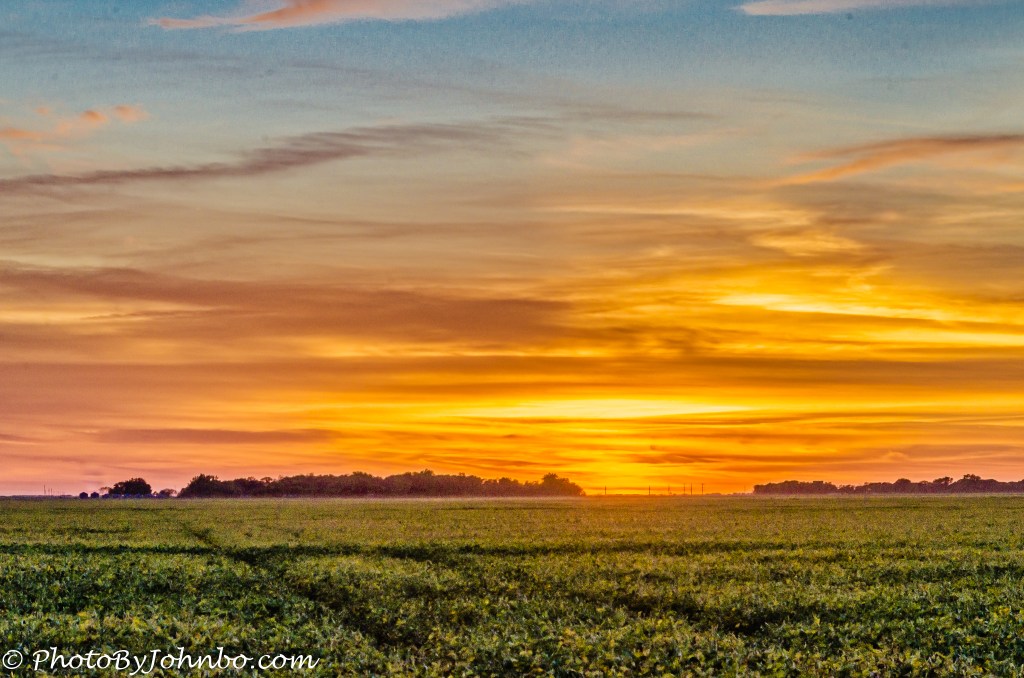
City Mouse thought the Badlands were a band. Country Mouse knew better. North Dakota’s got layers—geological and otherwise. This week, Tina challenges us with a fable about two mice, one from the city and one from the country. She writes, “If you’re unfamiliar with the story, its moral is that no matter how appealing someone else’s life may seem, there really is no place like home.” You can read her entire challenge post here. The goal, as I interpret it, is to share differences and commonalities between the two environments.
I was born in a small town in North Dakota, but spent my formative years in Long Beach, California. Thirty years later, I returned to my birth state—and aside from travel, I’ve never left. Forgive me if I start with a bit of Country Mouse reminiscence.
Years ago, I struck up a conversation with a corporate pilot waiting for his employer to wrap up a meeting in Fargo. He was from Florida and remarked that North Dakota was the flattest state he’d ever flown over. I took him at his word. But later, curiosity got the better of me. A little internet digging revealed he was wrong—Florida is actually flatter. But I digress.

The opening photo was taken on our way home from a drive through the countryside. I’ve always thought of North Dakota as flat, and from my vantage point, it certainly feels that way. But as with most things here, there’s more dimension than meets the eye. My second photo, taken a few miles west of my hometown of Fargo, also implies the flatness of North Dakota. The image was captured with a drone at a height of only a few feet above the top of the sunflowers.

Western North Dakota, closer to where I was born, offers a dramatic contrast to the flat plains of the east. Here, the terrain begins to ripple and rise, revealing the rugged beauty of the Badlands. One of the best places to take it all in is the Painted Canyon Overlook, a scenic rest area off I-94 at Exit 32. It’s a convenient stop with panoramic views that showcase the layered geology and stark contours that define this part of the state.

One prominent American, New York politician Theodore Roosevelt, was a city mouse who, for a time, became a country mouse in North Dakota. Before he became president, he found solace in the rugged landscape of the state. In September 1883, at the age of 24, he arrived in the Badlands to hunt buffalo. Before leaving in early 1884, he purchased the Maltese Cross Ranch, located along the Little Missouri River, approximately seven miles (11 km) south of Medora.
Tragedy struck in April 1884 when Roosevelt, back in New York, lost both his wife and mother on the same day. Seeking distance from his profound grief and the public eye, he immediately returned to North Dakota to establish a second, more secluded ranch. His new ranch, Elkhorn, is roughly 35 miles (56 km) north of Medora. The isolation and stark beauty of the Badlands helped shape his resilience and conservation ethic, laying the groundwork for the leader he would become.

The city mouse in me can’t resist adding a twist. Just a few miles from our home in Fargo sits Bonanzaville, a living history museum and pioneer village. Its collection includes many historic buildings relocated or replicated from towns across eastern North Dakota.
One such structure is Fargo’s first house, built in 1869 by Henry Moore and George Mann. When built, this was a country mouse house, later to become a city mouse house. Originally built near the banks of the Red River, it was later relocated to higher ground after repeated flooding; a reminder that even early settlers had to adapt to the unpredictable nature of the prairie.

In North Dakota, a city mouse has limited housing options. A city mouse in Page, North Dakota, would have fewer than 500 residents in their “city.” The Brass Rail was built in 1889 in Page and moved to Bonanzaville in 1971. North Dakota entered the Union as a dry state, so the establishment did not serve alcohol until Prohibition was repealed in 1933. The building offered nine sleeping quarters, a bridal suite, and live entertainment from a player piano.
The Cass-Clay Creamery building is a replica of a creamery that was initially located in Kenmare, North Dakota, and was built in the 1930s. Creameries were vital to the agricultural economy. Farmers would bring large metal milk cans to the local railroad depot. The cans would be sent by train to the creamery, where the cream was separated and the cans were washed before being sent back to the farmers, often with a check inside.

The bank is a replica, built in 1989, of a land office that was once located in Cogswell, North Dakota, another “city” of fewer than 500 residents. Land offices were crucial to early pioneers, especially after the Homestead Act of 1862 was passed, which allowed settlers to claim 160 acres of land. By the 1930s, homesteads were granted at 320 acres in North Dakota. My father bought a farm from an original homesteader in the 1940s.
The Furnberg Store, built in 1899, is an original building that was moved to Bonanzaville in 1968. It was initially located in Osgood, North Dakota, a small community south of West Fargo. Owned by Christian and Johanna Furnberg, it functioned as a general store, blacksmith shop, and even the town’s post office until 1911. The store operated for over 50 years before closing in 1953.

David H. Houston, a Scottish immigrant, inventor, and farmer, built this elegant homestead near Hunter, North Dakota, in 1881. The house, technically a farmhouse, boasts modern amenities, including a hot air furnace and an indoor bathroom, both of which were rare at the time. While his photographic inventions, including his patented roll-film mechanism licensed to Eastman Kodak, earned him wealth and a place in history, this impressive home stands as a reflection of his life on the North Dakota prairie. It’s not a city mouse house, but what could really be called a country mouse mansion in those days.

I am especially tied to Dawson Hall. For a time, I was involved in the local theater communities in the area. I was an actor and performer, and provided other theatrical work for the Harwood Prairie Players. Every Spring, I’d be in rehearsal or on set construction projects for the group that held their annual shows at Dawson Hall. The building at Bonanzaville is not a historical building but a modern replica constructed to serve as a venue for events such as weddings, receptions, and banquets. It was built to resemble a historical community hall, with a rustic theme that fits the atmosphere of the Pioneer Village. While it does not have a historical past of its own, it plays a vital role in Bonanzaville’s present-day operations by providing a space for gatherings and generating revenue for the museum.

Bonanzaville is more than a collection of buildings; it’s a recreation of a North Dakota town from an earlier era. There’s a church, a school, a drug store, a telephone office, a fire station, and two train stations from early North Dakota towns. Every year, the streets are alive with people during Pioneer Days when performers dressed in period costumes mingle with the visitors. From the classic cars in the mechanic’s garage to the quiet corners of the schoolhouse, each building tells a story of everyday life on the prairie. It’s truly a home for a city mouse.
That’s my response to Tina’s challenge for this week. I reworked most of the photos for this challenge in 2K HD, and they are in the gallery on my Flickr site here. Thanks to Tina for allowing me the opportunity to conduct some AI research on the background and share stories about the places in my photo set. In North Dakota, even the city mouse isn’t in a skyscraper-clad urban center. While traveling, when standing in a long line in a big city, I sometimes make small talk with the people in front of or behind me in line. My usual conversation starter is, “I’m from North Dakota. We are not used to standing in lines.” Of course, I always say it with a smile so as not to offend.
Next week, the Lens-Artists Challenge will be guest-hosted by Joanne of Joanne Mason Photography. Be sure to follow her here so you don’t miss her challenge post that will go live on Saturday at noon Eastern Time. If you’d like to respond to a challenge but aren’t sure how to get started, check here.
John Steiner
 Journeys with Johnbo
Thank you for your introduction to North Dakota, you have captured some beautiful places, that sunflower field – so big. The painted canyon looks so interesting. The housing present different times so well. I can sense the affection you have for your state.
Thanks, Ritva!
This was an interesting introduction to a state I know little about, although of course I’ve heard of, and would love to see, the Badlands 🙂 Also, Bonanzaville sounds like the sort of place I would enjoy exploring and photographing.
It’s been about five years since I last visited Bonanzaville. It’s time I went back to see what’s new!
Thanks, Sarah!
John, thank you for sharing your beautiful North Dakota with us. I love those sunflowers! I love that your “cities” are historic small towns.
Thanks, Beth… cities were hard to come by in the early days of the Dakota Territory. Fargo is now the biggest city in the state, with the metro area around 250,000 people.
What a fun tour and history of North Dakota. I have fond memories of the badlands, but didn’t explore the cities.
Thanks, Brad! The badlands are truly beautiful!
I so much enjoyed reading your post and your photos are brilliant, John. I love the sunflowers, absolute perfection! It feels like you really returned home, the pride shines through.
Thanks, Sofia. I really enjoyed sharing the information about my home state.
What a lovely collection of reminisences, John, and I love the field of sunflowers. I think the Badlands are quite rugged? The song that comes to mind for me is ‘take me back to the Black Hills, the Black Hills of Dakota… I have, of course, never been there xx
The badlands are quite rugged. One thing I didn’t mention is that in Theodore Roosevelt National Park, the Elkhorn section of the park, where TR built his large cabin, is so remote, visitors to the park are warned that high clearance SUVs and trucks are required to brave the roads to the ranch.
Very interesting post! I love those first two, the sunset and sunflowers, gorgeous!
Thanks, Pamela!
Interesting post and beautiful photos. Thanks for the backstory and bit of history. The sunflower field is amazing.
Thanks, Suzanne!
Thanks for all the history you provided along with these great photos, John. These challenges sometimes also offer surprises. I did not know about your acting days.
Thanks, Egidio. My acting was just another, “I will try anything once.” The first time I tried singing, was the last. >grin<
LOL for your closing “I’m from North Dakota” comment John. I suppose “city” can have different meanings depending on the location. I loved your choices, especially knowing how many large cities you’ve traveled to see – this one has some real personality! Terrific take on the topic.
Thanks, Tina! Fargo and suburbs are almost 1/3 of the state in population. We have lots of small cities. 🙂
This was interesting history John, with delightful photos. I especial loved the sunflowers. I have to say though…I am most fascinated to hear you were an actor and performer.
I am sure you enjoy lots of conversation when you let people know you are from ND. Not too often do we meet people from that neck of the woods. My nephew loved his life at UND. And while it felt a little countryish to me, it must feel like more of a city to the majority of you.
Thanks, Donna. That sunflower photo is one of my favorites. When the fields are ready to harvest, they are beautiful.
What lovely snippets of the past. History is one of my favourite subjects and the way people lived – their homes, their lives and everything in between.
That field of sunflowers is large and no doubt gives a massive harvest for the owners. Great shot.
Thanks for sharing, John.
Thanks, Vicki. I, too, enjoy the history in these old buildings.
Wonderful take on the theme!
Thanks, Nora!
I like the village you captured
Thanks, I. J
A really interesting post on North Dakota and great photos too
Thank you!
It is like looking back in time John, what a great post.
Thanks, Leanne!